Los Angeles Rams vs Arizona Cardinals Match Player Stats: Stafford’s Four-TD Night Seals a 37-20 Rout
Losing at home in a season finale can wreck a fanbase’s offseason mood, and that’s exactly the trap the Cardinals walked into at SoFi Stadium. This breakdown of the Los Angeles Rams vs Arizona Cardinals match player stats shows how Matthew Stafford quietly authored one of his cleanest games of the year while Arizona’s offense produced good numbers that never translated into the scoreboard. Here’s every box-score detail from the Week 18 finale, position by position.
The Lead
The Rams closed out their regular season on January 4, 2026, hosting the Arizona Cardinals at SoFi Stadium in Inglewood in front of 72,004 fans. Los Angeles controlled the game from the opening field goal and pulled away in the fourth quarter, finishing on top 37-20 to lock in a 12-5 record and home-field momentum heading into the playoffs. Arizona left with a 3-14 finish, the first 14-loss season in franchise history.
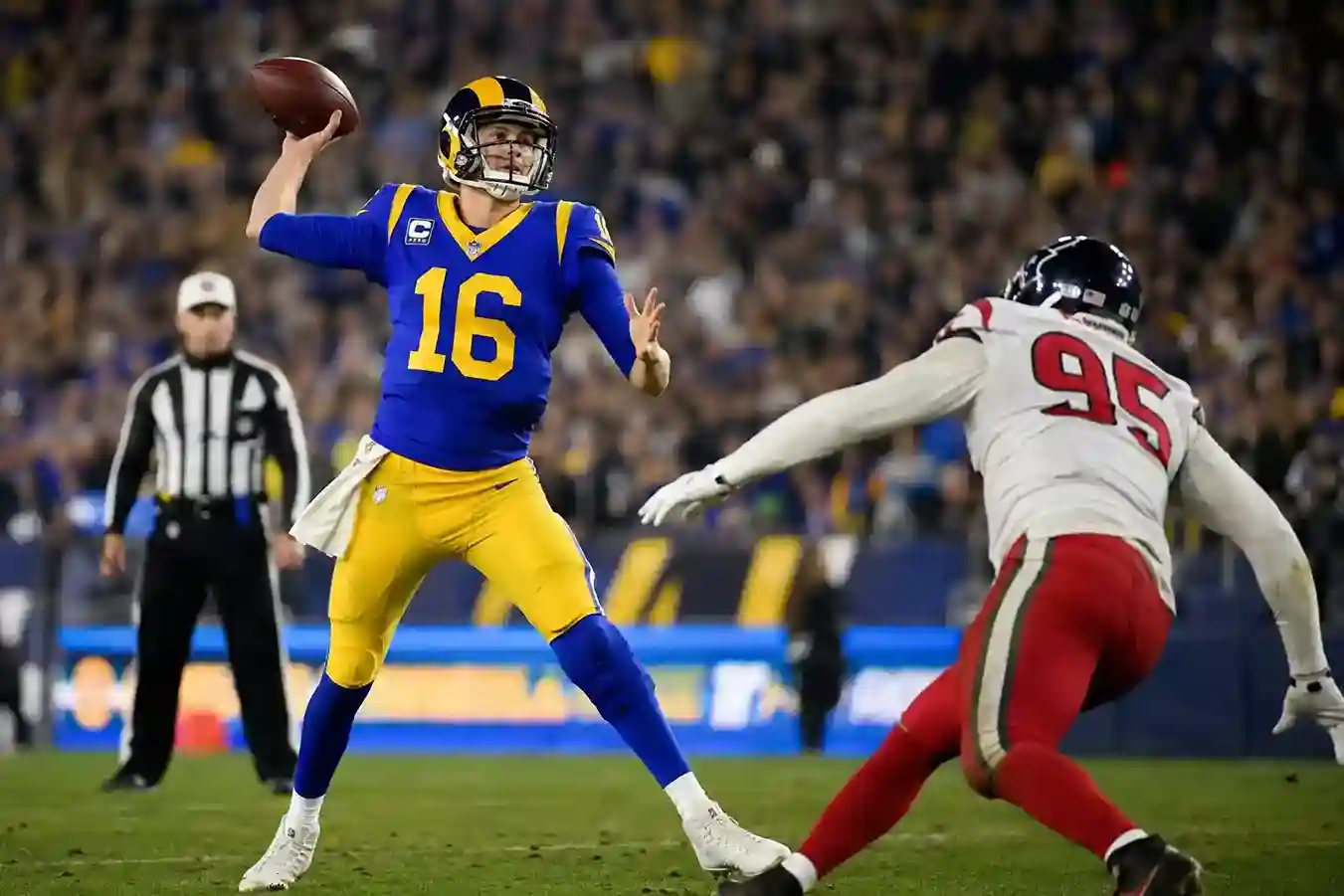
Stafford went 25-of-40 for 259 yards and four touchdowns without a single interception, spreading the ball to four different pass-catchers for scores. Jacoby Brissett actually out-threw him in raw passing yardage — 243 yards on 22-of-31 with two touchdowns — but Arizona’s offense stalled behind six sacks allowed and two turnovers that erased any real chance of an upset. Tight end Trey McBride hit an NFL single-season receptions record for his position in the process, one of the few individual bright spots in a lopsided defeat.
Match Overview Table
| Information | Match Details |
| Event | NFL Regular Season, Week 18 |
| Game | Arizona Cardinals vs Los Angeles Rams |
| Date | Sunday, January 4, 2026 |
| Venue | SoFi Stadium, Inglewood, CA |
| Attendance | 72,004 |
| Winner | Los Angeles Rams |
| Final Score | Rams 37, Cardinals 20 |
| Broadcast | Fox Sports (Week 18 national/regional coverage) |
Core Match Statistics Overview
Since this is an NFL matchup rather than a basketball box score, the categories that actually decide football games are total yardage, third-down efficiency, and ball security — not shooting percentages.
| Team Metric | Arizona Cardinals | Los Angeles Rams |
| Total Yards | 317 | 395 |
| Passing Yards | 243 | 259 |
| Rushing Yards | 60 | 122 |
| First Downs | 17 | 25 |
| Third Down Conversions | 4/11 (36.4%) | 9/16 (56.3%) |
| Fourth Down Conversions | 1/2 | 1/1 |
| Turnovers | 2 | 0 |
| Penalties | 6-45 | 4-20 |
| Time of Game | 2:53 | 2:53 |
Third Down Efficiency
- The Rams converted better than half their third-down attempts (9/16), which kept Arizona’s defense on the field and set up the fourth-quarter pull-away.
- Arizona’s 36.4% third-down rate forced Brissett into obvious passing situations, which is exactly where the Cardinals’ offensive line struggled most.
Turnover Battle
- Los Angeles played a clean, zero-turnover game — the single biggest separator in a contest where the Cardinals actually out-gained the Rams through the air.
- Arizona’s two giveaways, paired with six sacks allowed, meant several promising drives died before they reached scoring range.
Rushing Production
- Kyren Williams and Blake Corum combined for 25 carries and 119 yards, giving Los Angeles a run game that Arizona never solved.
- The Cardinals’ backfield, led by Emari Demercado’s 29 yards on just two carries, had explosive moments but couldn’t sustain drives on the ground.
Red Zone and Explosive Plays
- Four different Rams pass-catchers scored touchdowns, spreading the defensive attention Arizona’s secondary had to account for.
- Arizona’s touchdowns came on chunk plays — a 43-yard strike to Michael Wilson and a 7-yard score to Josiah Deguara — rather than sustained drives.
Period-by-Period Analysis
First Quarter: Field Goal Trade
| Team | 1st Quarter |
| Cardinals | 3 |
| Rams | 3 |
- Los Angeles struck first, with Harrison Mevis connecting from 34 yards to cap a long opening drive.
- Chad Ryland answered for Arizona with a 45-yard field goal, keeping the game level after one quarter.
- Neither offense found the end zone early, setting up a game that would swing hard in the second quarter.
Second Quarter: Rams Pull Ahead
| Team | 2nd Quarter |
| Cardinals | 3 |
| Rams | 13 |
- Mevis and Ryland traded field goals again (42 yards and 56 yards respectively), with Ryland’s kick tying an efficient half of placekicking.
- Stafford found Puka Nacua for a 2-yard touchdown with 1:22 left in the half, the first sign the Rams’ passing attack was heating up.
- Mevis added a fourth field goal of the half — a 40-yarder as time expired — pushing Los Angeles into the locker room up 16-6.
Third Quarter: Arizona’s Best Stretch
| Team | 3rd Quarter |
| Cardinals | 14 |
| Rams | 7 |
- Brissett connected with Michael Wilson on a 43-yard touchdown, Arizona’s first passing score of the game and a genuine jolt of momentum.
- Josiah Deguara added a short touchdown catch minutes later, and Arizona briefly took a 20-16 lead — its only lead of the game.
- Stafford answered immediately, hitting Colby Parkinson for a 21-yard score to put the Rams back in front 23-20 heading into the fourth.
Fourth Quarter: Rams Take Over
| Team | 4th Quarter |
| Cardinals | 0 |
| Rams | 14 |
- Stafford found Tyler Higbee for a 22-yard touchdown, Higbee’s first receiving score since early November after returning from injury.
- Parkinson caught his second touchdown of the game, a 1-yard score with 4:15 remaining, closing out the scoring at 37-20.
- Arizona’s offense went scoreless over the final quarter as turnovers and pressure shut down any comeback hope.
Los Angeles Rams Player Statistics
Matthew Stafford (QB): 25/40, 259 yards, 4 TD, 0 INT, 1 carry for 3 yards Stafford’s four-touchdown, zero-interception outing was the cleanest passing performance of the game by either quarterback. He spread scoring throws across four different targets, which made Arizona’s defense pick its poison all night.
Puka Nacua (WR): 10 receptions on 11 targets, 76 yards, 1 TD Nacua was Stafford’s clear top target, hauling in 10 of 11 looks and scoring the Rams’ first touchdown of the game. His workload passed Isaac Bruce for sole possession of second place on the franchise’s single-season receptions list.
Tyler Higbee (TE): 5 receptions, 91 yards, 1 TD Higbee led all Rams pass-catchers in yardage and scored his first touchdown since early November, marking a strong return from a six-game injury absence.
Colby Parkinson (TE): 4 receptions, 36 yards, 2 TD Parkinson was the most efficient scorer on the field, turning just four catches into two touchdowns, including the game-sealing score in the final five minutes.
Kyren Williams (RB): 12 carries, 60 yards, 3 receptions for 21 yards Williams paced the Rams’ ground attack and stayed involved as a receiver, giving Los Angeles balance that Arizona’s front seven couldn’t fully contain.
Arizona Cardinals Player Statistics
Jacoby Brissett (QB): 22/31, 243 yards, 2 TD, 1 INT, sacked 6 times for 33 yards Brissett actually out-gained Stafford through the air and threw two touchdowns of his own, but six sacks and a costly interception blunted any chance of an upset.
Trey McBride (TE): 7 receptions, 65 yards McBride’s seven catches pushed his season total to an NFL single-season record for a tight end, a genuine individual milestone inside an otherwise difficult team loss.
Michael Wilson (WR): 5 receptions, 99 yards, 1 TD Wilson led all Cardinals receivers in yardage, punctuated by a 43-yard touchdown that briefly gave Arizona its only lead of the game.
Emari Demercado (RB): 2 carries, 29 yards, 1 reception for 28 yards Demercado made the most of a light workload, averaging over 14 yards per carry and adding a long catch out of the backfield.
Statistical Leaders Summary Table
| Category | Arizona Cardinals | Los Angeles Rams |
| Passing Leader | Jacoby Brissett (243 yds, 2 TD) | Matthew Stafford (259 yds, 4 TD) |
| Rushing Leader | Emari Demercado (29 yds on 2 carries) | Kyren Williams (60 yds on 12 carries) |
| Receiving Leader | Michael Wilson (99 yds, 1 TD) | Tyler Higbee (91 yds, 1 TD) |
| Receptions Leader | Trey McBride (7 catches) | Puka Nacua (10 catches) |
Why the Rams Won
Zero Turnovers, Total Control
| Metric | Cardinals | Rams |
| Turnovers | 2 | 0 |
| Total Yards | 317 | 395 |
Los Angeles didn’t need a spectacular game to win comfortably — just a mistake-free one. Playing turnover-free football while forcing two Arizona giveaways created an yardage and possession gap that Arizona simply couldn’t close.
Touchdown Distribution
Four separate Rams players scored touchdowns (Nacua, Higbee, and Parkinson twice), which meant Arizona’s defense could never key on a single receiving threat. That kind of spread-the-wealth passing attack is difficult to game-plan against in a single week.
Protecting Stafford
The Rams’ offensive line allowed just one sack all game, giving Stafford a clean pocket to complete 62.5% of his passes and post a 114.5 passer rating. Compare that to Arizona’s line, which surrendered six sacks and repeatedly forced Brissett off his spot.
Why the Cardinals Lost
Six Sacks Allowed
Arizona’s pass protection issues compounded throughout the game, with Brissett taking six sacks for 33 yards in losses. That kind of pressure disrupts rhythm and forces quarterbacks into rushed, lower-percentage throws.
Turnovers at the Wrong Moments
Two Cardinals turnovers, paired with a scoreless fourth quarter, meant Arizona had no answer once Los Angeles pulled ahead for good. A defense already without two injured starters — rookie corner Will Johnson and linebacker Channing Tindall, both knocked out with knee injuries in the first half — had no margin for offensive mistakes.
Historical Context & Advanced Insights
Season Series and Rivalry Context
The Rams have now won three straight meetings against the Cardinals dating back to 2024, extending a series that began in 1937. Los Angeles holds a 53-41-2 edge in the all-time series between the two franchises, with the January 4 result marking their latest meeting before the clubs were scheduled to face off again later in 2026.
Efficiency Over Raw Yardage
This game is a useful reminder that total passing yards don’t decide outcomes on their own. Brissett actually threw for fewer yards than Stafford by a slim margin but posted a lower completion percentage (71.0% vs. 62.5% attempts completed by Stafford, whose true completion rate was 62.5% on higher volume) and, more importantly, a lower touchdown-to-attempt ratio.
Stafford’s four touchdowns on 40 attempts (10% TD rate) dwarfed Brissett’s two scores on 31 attempts, and the zero-interception, one-sack-allowed line pushed the efficiency gap even wider in the Rams’ favor.
Game Implications & Key Lessons
What This Means for the Rams
- A 12-5 finish and a 7-1 home record heading into the postseason gives Los Angeles real confidence in its late-season passing attack.
- Getting healthy contributions from Higbee and Parkinson in the same game suggests the tight end room could be a playoff weapon.
- Four different touchdown scorers signals offensive coordinator flexibility that opponents will have to prepare for on short notice.
What This Means for the Cardinals
- A 3-14 finish, the worst in franchise history, puts real pressure on the front office heading into a draft where Arizona holds a top-three pick.
- Offensive line protection has to be the offseason’s top priority after six sacks allowed in a season finale.
- The coaching staff’s future is now an open question after a fourth straight losing season under Jonathan Gannon, who fell to 15-36 as head coach.
Key Lessons from the Game
- Turnover margin remains one of the single best predictors of NFL outcomes, even when total yardage is close.
- Distributing touchdowns across multiple pass-catchers makes an offense far harder to defend than funneling production through one star.
- Offensive line performance directly shapes quarterback efficiency — clean pockets produced a 114.5 rating, while pressure limited the other side’s ceiling.
- Individual milestones, like McBride’s receptions record, can still emerge from lopsided team losses.
- Third-down conversion rate is often a better predictor of sustained scoring than any single explosive play.
- Depth at tight end can be a real difference-maker when a top receiver is the only proven weapon on the other side.
FAQs
Who won the Rams vs Cardinals game?
The Los Angeles Rams won 37-20 over the Arizona Cardinals on January 4, 2026, at SoFi Stadium.
Who finished the game with the most passing yards?
Jacoby Brissett led all passers with 243 yards, narrowly behind Matthew Stafford’s 259 yards, though Stafford threw four touchdowns to Brissett’s two.
What were the stats for this game for Matthew Stafford?
Stafford finished 25-of-40 for 259 yards, four touchdowns, and zero interceptions, posting a 114.5 passer rating.
Which Cardinals player set a record in this game?
Tight end Trey McBride’s seven receptions extended his NFL single-season record for receptions by a tight end to 126 for the season.
How many turnovers did each team have?
The Cardinals committed two turnovers while the Rams played the entire game without a single giveaway.
What was the attendance for this game?
The game drew 72,004 fans to SoFi Stadium in Inglewood, California.
Conclusion
The final score suggests a blowout, but the underlying box score tells a tighter story: Arizona actually competed statistically for three quarters before turnovers and pass protection issues opened the door.
Los Angeles didn’t need a dominant statistical night from any single player — it needed clean execution, zero turnovers, and touchdowns spread across four different targets. That balance, more than any individual star performance, is what separated a 12-5 playoff team from a franchise closing out its worst season on record.