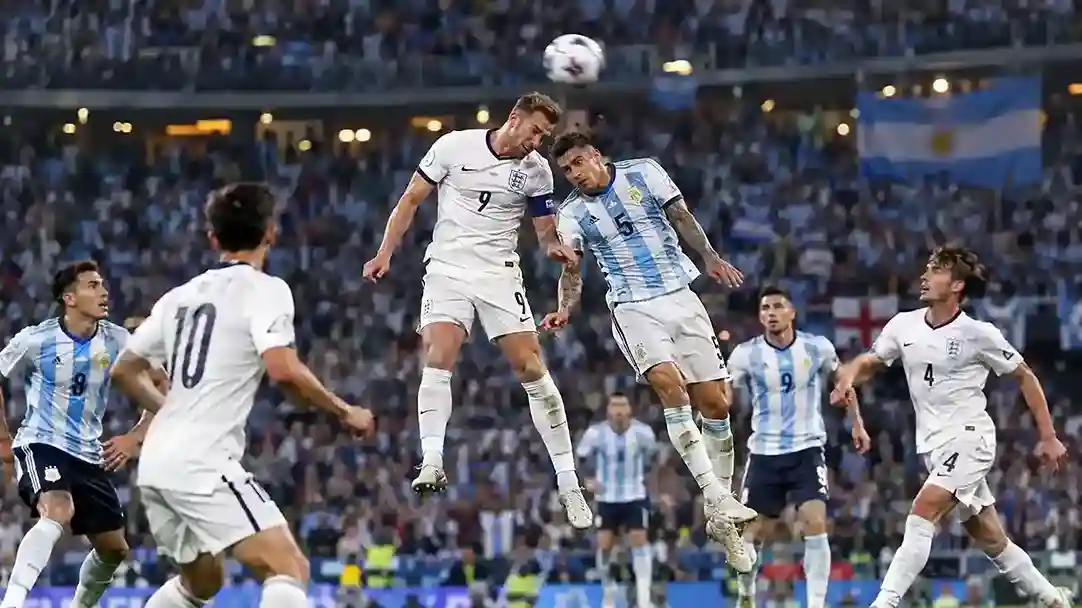
England National Football Team vs Argentina National Football Team Lineups: Messi’s Twin Assists Send Argentina Back to the World Cup Final
Fans searching for the England national football team vs Argentina national football team lineups from this World Cup 2026 semi-final want more than a team sheet — they want to know how a 1-0 English lead disappeared inside six second-half minutes.
Two moments of pure instinct from Lionel Messi flipped the entire tie, denying England a first World Cup final since 1966. Here’s exactly how it happened, position by position, stat by stat.
The Lead
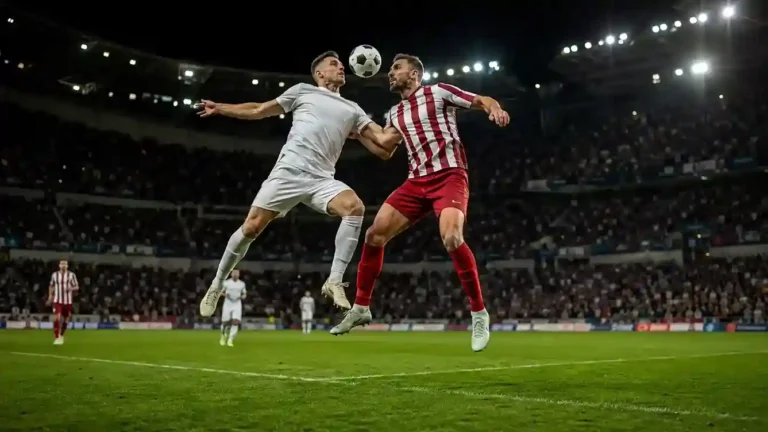
Argentina beat England 2-1 in the FIFA World Cup 2026 semi-final at Atlanta Stadium on Wednesday, July 15, in front of 68,239 fans. Anthony Gordon put England ahead in the 55th minute, finishing off a pinpoint ball from Morgan Rogers, and for half an hour it looked like Thomas Tuchel’s side would reach their first final in 60 years. Then Argentina, as they have done all tournament, refused to fold.
Lionel Messi, quiet for long stretches but decisive when it mattered, set up Enzo Fernández’s equalizer in the 85th minute before crossing for substitute Lautaro Martínez to head home the winner two minutes into stoppage time.
The result sends the defending champions through to face Spain in Sunday’s final, while England must regroup for a third-place play-off against France. American referee Ismail Elfath took charge of the contest, backed by an all-U.S. officiating crew for the first time in a men’s World Cup semi-final.
Match Overview Table
| Information | Match Details |
| Event | FIFA World Cup 2026 – Semi-Final |
| Game | England vs Argentina |
| Date | Wednesday, July 15, 2026 |
| Venue | Atlanta Stadium (Mercedes-Benz Stadium), Atlanta, Georgia |
| Attendance | 68,239 |
| Winner | Argentina |
| Final Score | England 1-2 Argentina |
| Broadcast | BBC One & BBC iPlayer (UK); FOX Sports & Telemundo (US) |
Core Match Statistics Overview
The England vs Argentina lineups told part of the story, but the underlying numbers explain why Argentina’s comeback felt inevitable rather than lucky.
| Metric | England | Argentina |
| Possession | 36% | 64% |
| Shots | 5 | 15 |
| Shots on Target | 2 | 5 |
| Expected Goals (xG) | 0.53 | 1.84 |
| Accurate Passes | 273 (84%) | 537 (91%) |
| Duels Won | 50 | 52 |
| Corners | 2 | 6 |
| Fouls Committed | 11 | 15 |
| Saves | 3 (Pickford) | 1 (E. Martínez) |
Clinical Edge in the Final Third
- Argentina tripled England’s shot count (15 to 5) yet still needed a scrambled header in stoppage time to complete the turnaround.
- England’s xG of 0.53 from five attempts shows how narrow their route to goal was; almost everything of value came through Gordon and Kane in transition.
Passing and Territorial Control
- Argentina’s 91% pass accuracy and 64% possession let them dictate rhythm for long spells, particularly after the hour mark when England’s press dropped off.
- England’s own passing was efficient in short bursts (84% accuracy) but rarely progressed the ball into central areas past Enzo Fernández and Alexis Mac Allister.
Physical Duels and Discipline
- Duels won were almost dead level (52-50), which matches how tight the midfield battle felt for the first hour.
- Three yellow cards were shown — Cristian Romero and Lisandro Martínez for Argentina, Elliot Anderson for England — but none altered the flow of the game.
Goalkeeping and Last-Ditch Defending
- Jordan Pickford’s three saves, including a sharp near-post stop on Julián Álvarez right after half-time, kept England in front until the 85th minute.
- Djed Spence’s last-ditch recovery tackle on Giuliano Simeone was arguably England’s single biggest defensive contribution of the night.
Half-by-Half Analysis
First Half
| Period | England | Argentina |
| Goals | 0 | 0 |
- A cagey opening 45 minutes produced almost no clear chances for either side, with both managers wary of committing bodies forward.
- Elliot Anderson picked up an early yellow card but still had England’s best passing spell of the half, controlling tempo in midfield.
- Argentina probed patiently through Mac Allister and Fernández without seriously testing Pickford.
Second Half (Including Stoppage Time)
| Period | England | Argentina |
| Goals | 1 | 2 |
- Gordon’s 55th-minute finish, capping a driving run and cutback from Rogers, gave England the lead their early second-half energy deserved.
- Argentina responded by pushing Molina and Tagliafico higher and funneling possession through Messi, who had barely touched the ball in threatening areas until that point.
- The final ten minutes turned the semi-final: Fernández’s curling equalizer in the 85th minute was followed by Martínez’s headed winner in the second minute of stoppage time, both created by Messi.
England Player Statistics
Jordan Pickford (Goalkeeper) — 3 saves, including a crucial stop on Álvarez early in the second half. Pickford’s shot-stopping is the only reason the scoreline stayed close for as long as it did; he had little chance with either Argentina goal.
Anthony Gordon (Forward) — 1 goal, substituted in the 72nd minute. Gordon’s finish was the difference-maker for 30 minutes and capped a strong tournament for the winger before Tuchel withdrew him for defensive reinforcement.
Jude Bellingham (Midfielder) — No goals or assists, targeted heavily by Argentina’s midfield fouls. Bellingham drew fouls and occupied defenders but was kept away from the shooting positions that defined his earlier tournament performances.
Djed Spence (Right-Back) — No goals or assists, one decisive last-ditch tackle. Spence’s recovery challenge on Simeone and his pace in behind Argentina’s back line made him one of England’s most reliable outlets all night.
Argentina Player Statistics
Lionel Messi (Forward) — 2 assists in his first-ever appearance against England. Messi was quiet for long periods before producing the exact ball for Fernández’s equalizer and the cross for Martínez’s winner, the definition of a low-volume, high-impact display.
Enzo Fernández (Midfielder) — 1 goal, the 85th-minute equalizer from outside the box. Fernández’s strike came from Argentina’s most sustained spell of second-half pressure and shifted the entire momentum of the tie.
Lautaro Martínez (Forward, Substitute) — 1 goal, the 90+2′ winning header. Introduced in the 81st minute specifically for a direct aerial outlet, Martínez justified the change within nine minutes of coming on.
Emiliano Martínez (Goalkeeper) — 1 save, largely untroubled. Argentina’s goalkeeper had a quiet night defensively, a reflection of how little England managed to create in open play.
Statistical Leaders Summary Table
| Category | England | Argentina |
| Leading Scorer | Anthony Gordon (1) | Enzo Fernández (1) / Lautaro Martínez (1) |
| Most Assists | Morgan Rogers (1) | Lionel Messi (2) |
| Most Saves | Jordan Pickford (3) | Emiliano Martínez (1) |
| Most Shots on Target | Harry Kane / Gordon (limited data) | Messi / Álvarez (forward pairing) |
Why Argentina Won
Volume of Chances Over 90 Minutes
Argentina’s 15 shots to England’s 5 meant the pressure was always going to tell eventually. Even a dip in quality across most of the match didn’t matter once Fernández and Martínez found the two moments that counted.
| Metric | Argentina Advantage |
| Shots | +10 |
| xG | +1.31 |
| Possession | +28% |
Messi’s Game-Management
Rather than forcing the issue for 90 minutes, Messi conserved his influence and delivered it in the two moments Argentina needed it most — a pattern that has defined his tournament since the group stage.
Bench Impact
Lautaro Martínez’s introduction at 81 minutes for a tiring Tagliafico gave Argentina a fresh out-ball and aerial target in exactly the right area at exactly the right time, and he converted the very kind of chance he was brought on to attack.
Why England Lost
Chance Creation Dried Up After the Goal
Once ahead, England created almost nothing else in open play, managing only five shots for the entire match. Sitting deeper invited exactly the sustained Argentina pressure that eventually broke through.
Late Substitutions Changed the Team’s Shape Too Early
Tuchel’s decision to withdraw Gordon for Ezri Konsa around the 72nd minute, shifting to a back five, came before England had fully seen out the lead and arguably reduced their ability to break forward and relieve pressure late on.
Historical Context & Advanced Insights
Head-to-Head at the World Cup
| Year | Stage | Result |
| 1966 | Quarter-Final | England 1-0 Argentina |
| 1986 | Quarter-Final | Argentina 2-1 England |
| 1998 | Round of 16 | Argentina won on penalties (2-2 after 90) |
| 2002 | Group Stage | England 1-0 Argentina |
| 2026 | Semi-Final | Argentina 2-1 England |
Argentina has now eliminated England from the World Cup three times — 1986, 1998, and 2026 — compared to England’s single knockout win over Argentina, in 1966. It was also the first time Messi had ever faced England in his career, with the two nations not having met at all since a 2005 friendly.
Advanced Statistical Insights
The gap between Argentina’s 1.84 xG and England’s 0.53 xG lines up almost exactly with the eventual 2-1 scoreline, suggesting the result reflected the run of play rather than a smash-and-grab.
What’s more revealing is Messi’s assist-to-touch ratio: with Argentina dominating possession at 64%, Messi didn’t need heavy involvement to be decisive — he needed two touches in the right positions. That’s the modern version of “efficiency over volume” that keeps showing up in Argentina’s knockout-stage wins under Lionel Scaloni.
Game Implications & Key Lessons
What This Means for Argentina
- A fourth consecutive major final appearance reinforces Argentina’s status as the standard-bearer of this generation of international football.
- Messi’s continued influence, even in quieter matches, gives Scaloni a level of tactical flexibility few other squads can match.
- The bench-driven winner is a template Argentina can lean on again in Sunday’s final against Spain.
What This Means for England
- England’s inability to create beyond five shots all night, even while leading, is the clearest area Tuchel needs to address before the next tournament cycle.
- The team’s next assignment, a third-place play-off against France, offers a quick chance to respond before the disappointment sets in.
Key Lessons
- Leading a knockout match is not the same as controlling it — England led for 30 minutes but never controlled the game’s territory.
- Substitutions built for defense can backfire if they invite pressure instead of relieving it.
- A single elite creator can outweigh a possession deficit, as Messi proved with two assists on limited touches.
- Fresh legs off the bench, used at the right moment, remain one of the most underrated tactical tools in knockout football.
- Historical head-to-head trends can shift quickly, but World Cup knockout football still rewards composure in the final ten minutes above everything else.
FAQs
Who won the England vs Argentina World Cup 2026 semi-final?
Argentina won 2-1, coming from behind with goals in the 85th minute and second minute of stoppage time.
What were the confirmed England vs Argentina lineups?
England lined up in a 4-2-3-1: Pickford; James, Stones, Guéhi, Spence; Rice, Anderson; Rogers, Bellingham, Gordon; Kane. Argentina played a 4-4-2: E. Martínez; Molina, Romero, L. Martínez, Tagliafico; Simeone, Fernández, Paredes, Mac Allister; Messi, Álvarez.
Who scored the goals?
Anthony Gordon scored for England in the 55th minute. Enzo Fernández equalized in the 85th minute, and substitute Lautaro Martínez scored the winner in the second minute of stoppage time, both created by Lionel Messi.
How many assists did Lionel Messi have?
Messi recorded two assists, setting up both of Argentina’s goals in what was his first career appearance against England.
What was the attendance at Atlanta Stadium?
The official attendance was 68,239.
Who plays in the World Cup final after this result?
Argentina advances to face Spain in the final, while England plays France in the third-place play-off.
Conclusion
England’s approach for large stretches of this semi-final was sound enough to lead a World Cup last-four match against the defending champions, but leading and controlling are different things. Argentina’s higher shot volume, superior possession, and two decisive contributions from Lionel Messi turned a tight game into a familiar story: efficiency and squad depth outlasting an early lead built on limited chances.