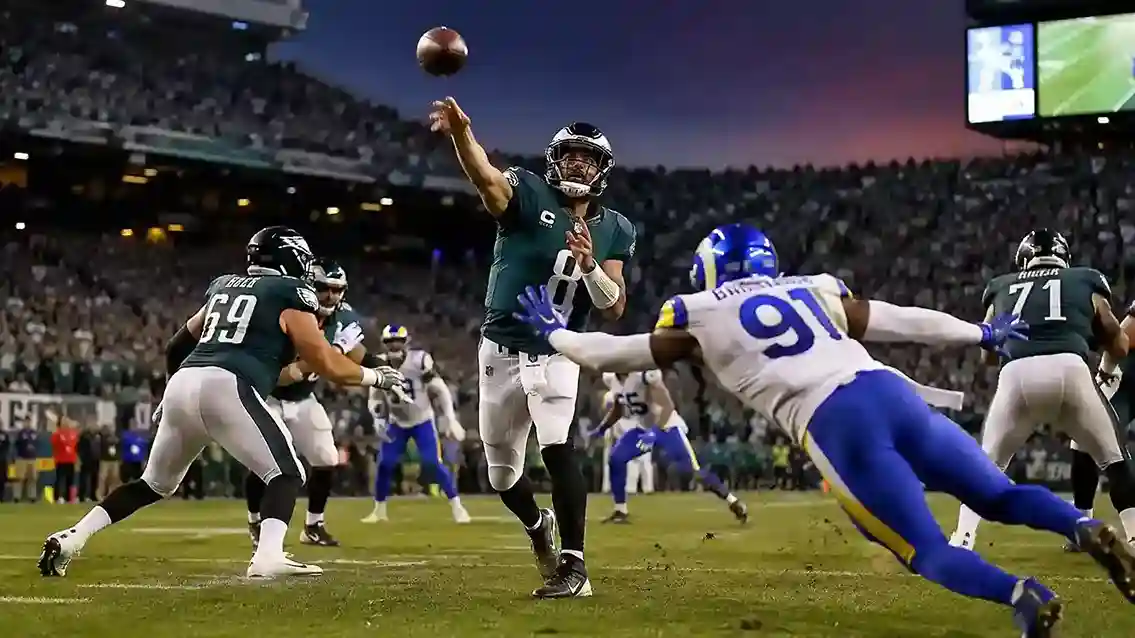
Philadelphia Eagles vs Los Angeles Rams Match Player Stats: A Blocked Kick and a Fourth-Quarter Rally Seal It for Philly
Chasing a game that felt lost by halftime is never easy, and the Los Angeles Rams found that out the hard way. A 19-7 lead evaporated as Jalen Hurts got hot and the Eagles defense delivered the signature play. This breakdown of the philadelphia eagles vs los angeles rams match player stats gives you every number that mattered, from Matthew Stafford’s efficient first half to the blocked field goal that flipped the scoreboard for good.
The Lead
On September 21, 2025, the Rams and Eagles met at Lincoln Financial Field in Philadelphia for a Week 3 NFC showdown between two teams that had opened the season 2-0. A crowd of 69,879 packed the Linc for a game that started as a Rams track meet and ended as an Eagles fourth-quarter surge. Los Angeles built a 19-7 halftime cushion on the back of four Joshua Karty field goals and a 44-yard touchdown strike from Stafford to Davante Adams, while Philadelphia’s offense managed only 33 total net yards over the opening two quarters.
The tone flipped entirely after the break. Jalen Hurts threw touchdown passes to Dallas Goedert and A.J. Brown to trim the deficit to 26-21, then engineered a 17-play, 91-yard drive capped by a go-ahead score to DeVonta Smith with under two minutes left. Stafford still had a shot to answer, driving the Rams into position for a potential game-winning field goal, but Jordan Davis blocked Karty’s 44-yard attempt and returned it 61 yards for the clinching defensive touchdown, sealing a 33-26 Philadelphia win and pushing the Eagles to 3-0.
Match Overview Table
| Information | Match Details |
| Event | NFL Week 3, 2025 Regular Season |
| Game | Los Angeles Rams vs Philadelphia Eagles |
| Date | September 21, 2025 |
| Venue | Lincoln Financial Field, Philadelphia, PA |
| Attendance | 69,879 |
| Winner | Philadelphia Eagles |
| Final Score | Eagles 33, Rams 26 |
| Broadcast | FOX |
Core Match Statistics Overview
Based on the individual box score entries, here’s how the two offenses stacked up across the board.
| Metric | Los Angeles Rams | Philadelphia Eagles |
| Passing Yards | 196 | 226 |
| Passing TDs | 2 | 3 |
| Interceptions Thrown | 1 | 0 |
| Rushing Yards | 160 | 86 |
| Rushing TDs | 0 | 1 |
| Sacks Allowed | 1 | 4 |
| Fumbles Lost | 0 | 1 |
| Field Goals Made | 4-of-6 | 0-of-0 |
Passing Efficiency
- Jalen Hurts posted a 117.4 passer rating on 21-of-32 passing, easily outproducing Matthew Stafford’s 82.4 mark despite taking four sacks.
- Stafford was efficient early (19-of-33, 196 yards) but the lone interception, snagged by linebacker Zack Baun, set up an early Eagles touchdown drive.
Ground Game Disparity
- Kyren Williams and Blake Corum combined for 147 of the Rams’ 160 rushing yards, giving Los Angeles a clear rushing-yardage edge in this Eagles vs Rams box score.
- Saquon Barkley was held to 46 yards on 18 carries, well below his usual workload against this opponent, while Hurts added 40 yards and a touchdown on scrambles and designed runs.
Red Zone and Field Position
- Karty’s four made field goals padded the Rams’ first-half total, but the missing touchdowns in the red zone left points on the board.
- Philadelphia’s ability to finish drives with touchdowns rather than kicks, three passing scores against zero field goal attempts, proved decisive down the stretch.
Period-by-Period Analysis
First Quarter
| Team | Q1 Score |
| Los Angeles Rams | 10 |
| Philadelphia Eagles | 7 |
- Hurts opened the scoring with a 1-yard touchdown run after Baun’s interception gave Philadelphia the ball at the Rams’ 38-yard line.
- Karty answered with a 51-yard field goal, then Stafford connected with Adams for a 44-yard touchdown to put Los Angeles ahead 10-7.
- The Rams’ offensive line controlled the trenches early, allowing Stafford time to push the ball downfield against a defense still finding its rhythm.
Second Quarter
| Team | Q2 Score |
| Los Angeles Rams | 9 |
| Philadelphia Eagles | 0 |
- Karty added field goals of 28 and 33 yards, and Puka Nacua began piling up catches on short and intermediate routes.
- Philadelphia’s offense stalled completely, managing only 33 total net yards of offense across the first half.
- Los Angeles carried a 19-7 lead into the locker room, looking firmly in control of the Eagles vs Rams match player stats storyline at that point.
Third Quarter
| Team | Q3 Score |
| Los Angeles Rams | 7 |
| Philadelphia Eagles | 14 |
- Stafford found Williams on a 10-yard touchdown pass early in the period to push the lead to 26-7, the Rams’ high-water mark.
- Hurts answered with two scoring drives of his own, a 33-yard strike to Dallas Goedert and a 9-yard touchdown to A.J. Brown, cutting the margin to 26-21.
- The Eagles offensive line settled down after halftime, giving Hurts the pockets he needed to attack the Rams’ secondary.
Fourth Quarter
| Team | Q4 Score |
| Los Angeles Rams | 0 |
| Philadelphia Eagles | 12 |
- Los Angeles failed on a 4th-and-1 attempt near midfield, handing momentum back to Philadelphia.
- Hurts drove the Eagles 91 yards over 17 plays and hit DeVonta Smith for the go-ahead score, though the two-point conversion failed, leaving Philadelphia up 27-26.
- Jordan Davis blocked Karty’s 44-yard field goal attempt with three seconds left and returned it 61 yards for the game-sealing defensive touchdown.
Los Angeles Rams Player Statistics
Matthew Stafford (QB): 19-of-33, 196 passing yards, 2 TD, 1 INT, 82.4 rating. Stafford was sharp for most of the afternoon and delivered the game’s longest offensive play, a 44-yard touchdown to Adams, but the fourth-quarter interception-free finish wasn’t enough once the Eagles found their rhythm.
Kyren Williams (RB): 20 carries, 94 rushing yards, plus 2 catches for 18 yards and a receiving touchdown. Williams was the engine of the Rams’ rushing attack and the only Los Angeles player to score multiple ways in this game.
Puka Nacua (WR): 11 receptions, 112 yards on 15 targets. Nacua was Stafford’s clear go-to target underneath and on intermediate routes, though he didn’t find the end zone.
Davante Adams (WR): 3 catches, 56 yards, 1 touchdown, including the 44-yard scoring connection. Limited in volume but explosive when targeted.
Philadelphia Eagles Player Statistics
Jalen Hurts (QB): 21-of-32, 226 passing yards, 3 passing TD, 0 INT, 117.4 rating, plus 9 carries for 40 rushing yards and a rushing touchdown. Hurts accounted for four total touchdowns and directed the game-winning drive under pressure late in the fourth quarter.
Saquon Barkley (RB): 18 carries, 46 rushing yards, plus 4 catches for 9 yards. A quiet day on the ground by his standards, but his short-yardage work helped extend drives when Philadelphia needed first downs most.
A.J. Brown (WR): 6 receptions, 109 yards, 1 touchdown on 10 targets, including a 38-yard gain that set up a scoring drive. Brown was Philadelphia’s most explosive weapon through the air.
DeVonta Smith (WR): 8 catches, 60 yards, 1 touchdown on 9 targets, capped by the game-winning 4-yard score with under two minutes remaining.
Dallas Goedert (TE): 1 catch for 33 yards and a touchdown, a big-play connection that jump-started the second-half comeback.
Statistical Leaders Summary Table
| Category | Los Angeles Rams | Philadelphia Eagles |
| Leading Passer | M. Stafford (196 yds, 2 TD) | J. Hurts (226 yds, 3 TD) |
| Leading Rusher | K. Williams (94 yds) | S. Barkley (46 yds) |
| Leading Receiver | P. Nacua (112 yds, 11 rec) | A.J. Brown (109 yds, 1 TD) |
| Defensive Highlight | K. Curl (9 tackles) | J. Davis (blocked FG, 61-yd TD return) |
Why Philadelphia Won
Fourth-Quarter Composure
- Hurts completed 21 of 32 passes for a 117.4 rating and threw three touchdown passes, all while absorbing four sacks.
- The Eagles’ 17-play, 91-yard go-ahead drive chewed clock and forced the Rams into a rushed final possession.
Balanced Passing Production
| Receiver | Targets | Receptions | Yards | TD |
| A.J. Brown | 10 | 6 | 109 | 1 |
| DeVonta Smith | 9 | 8 | 60 | 1 |
| Dallas Goedert | 2 | 1 | 33 | 1 |
Three different pass catchers scored touchdowns for Philadelphia, spreading the workload in a way Los Angeles’ secondary couldn’t fully account for.
Defensive Playmaking
- Zack Baun’s first-quarter interception set up an early touchdown, and Jordan Davis turned a blocked field goal into the decisive score.
- Philadelphia limited the Rams to zero fourth-quarter points after allowing 19 in the first half.
Why Los Angeles Lost
Settling for Field Goals
Karty converted 4 of 6 field goal attempts but the Rams never found the end zone on the ground and scored just two passing touchdowns, leaving points on the table in a game decided by seven.
Fourth-and-1 Miscue
Los Angeles’ failed 4th-and-1 conversion near midfield in the fourth quarter handed the ball back to Philadelphia at a critical moment, and the Eagles converted the opportunity into the go-ahead score.
Historical Context and Advanced Insights
Season Series and Head-to-Head Snapshot
| Meeting | Result |
| Nov 24, 2024 (Regular Season) | Eagles 37, Rams 20 |
| Jan 19, 2025 (Playoffs) | Eagles 28, Rams 22 |
| Sep 21, 2025 (This Game) | Eagles 33, Rams 26 |
Philadelphia has now won three straight meetings against Los Angeles, and the all-time series stands at 26-20-1 in the Eagles’ favor.
Advanced Statistical Insights
Hurts’ passer rating of 117.4 against Stafford’s 82.4 tells only part of the story. Philadelphia’s offense produced three passing touchdowns on just 32 attempts, an efficient touchdown rate that reflects how well Hurts distributed the ball to Brown, Smith, and Goedert once his line settled down after a shaky first half.
Meanwhile, the Rams’ 4-of-6 mark on field goals is a serviceable number, but a red-zone offense that converts touchdowns instead of settling for three points typically finishes this kind of game as the winner, not the team that let a 19-7 lead slip away.
Game Implications and Key Lessons
What This Means for Philadelphia
- The comeback win pushed the Eagles to 3-0 and validated their ability to overcome a slow offensive start.
- Hurts’ four-touchdown performance, three through the air and one on the ground, reinforced his dual-threat value in close games.
What This Means for Los Angeles
- The Rams fell to 2-1 and need to find more consistency in the red zone after settling for four field goals instead of touchdowns.
- Protecting fourth-quarter leads becomes the clear point of emphasis after squandering a 19-point cushion.
Key Lessons
- Field position swings, like Baun’s interception, can change the entire complexion of a game.
- A slow start doesn’t have to be fatal if the passing attack can be diversified in the second half.
- Settling for field goals in scoring position leaves a door open that a comeback-minded opponent can walk through.
- Special teams plays, like a blocked field goal returned for a touchdown, can single-handedly decide a seven-point game.
- Balanced receiving production, spreading targets among three or more pass catchers, makes an offense harder to defend late in games.
- Sack totals matter less than finishing drives; the Eagles absorbed four sacks yet still outscored the Rams by seven.
FAQs
Who won the Eagles vs Rams game on September 21, 2025?
The Philadelphia Eagles won 33-26, improving to 3-0 on the season.
What were Jalen Hurts’ stats in this game?
Hurts finished 21-of-32 passing for 226 yards and 3 touchdowns, adding 40 rushing yards and a rushing touchdown on 9 carries.
What were Matthew Stafford’s stats?
Stafford completed 19 of 33 passes for 196 yards, 2 touchdowns, and 1 interception.
Who led the Rams in receiving?
Puka Nacua led all receivers in the game with 11 catches for 112 yards on 15 targets.
How did Philadelphia complete the comeback?
The Eagles trailed 19-7 at halftime, then scored 26 unanswered points in the second half, capped by a blocked field goal returned for a touchdown by Jordan Davis.
What was Saquon Barkley’s rushing yard total?
Barkley rushed 18 times for 46 yards and added 4 catches for 9 yards out of the backfield.
Conclusion
This Eagles vs Rams box score is a reminder that efficiency in the fourth quarter beats a flashy start. Los Angeles moved the ball well for two quarters and built a comfortable cushion, but settling for field goals instead of touchdowns left the door open. Philadelphia’s balanced passing attack, timely defensive plays, and a game-changing special teams score turned a 19-7 deficit into a 33-26 victory, proving once again that finishing drives matters more than starting them fast.