New York Jets vs Buffalo Bills Match Player Stats: James Cook’s Two-TD Outburst Leads Bills to Victory
Struggling to make sense of how the Jets vs Bills matchup swung so hard in Buffalo’s favor? The box score tells a brutal story for New York, and if you’re searching for the full new york jets vs buffalo bills match player stats, the answer starts and ends with one running back who simply would not go down. Below is every number that mattered, broken down series by series and player by player.
The Lead
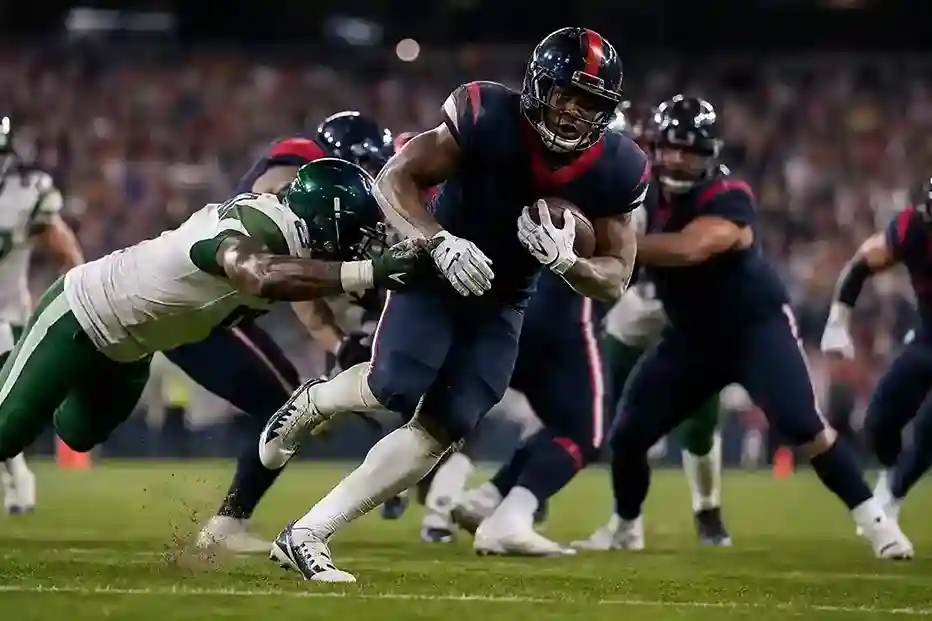
The Buffalo Bills traveled to MetLife Stadium on Sunday, September 14, 2025, and left with a 30-10 Week 2 win over the New York Jets in front of 80,875 fans. James Cook set the tone almost immediately, scoring on a 1-yard plunge to cap a 12-play opening drive, and he added a spectacular 44-yard scoring run in the second quarter that turned a competitive game into a rout. Buffalo’s defense did the rest, holding Justin Fields to just 2 of 8 passing for 25 yards through the first two quarters and forcing a fumble that flipped field position in the Bills’ favor.
By halftime, Buffalo led 20-0 and had outgained New York 247 yards to 78. Matt Prater chipped in three field goals, Elijah Moore scored on a 4-yard end-around, and the Jets’ only offensive touchdown came in garbage time when Tyrod Taylor found Jeremy Ruckert with 3:28 left. The Bills improved to 2-0 on the season; the Jets fell to 0-2, and the loss was compounded when Fields exited in the fourth quarter with a concussion.
Match Overview Table
| Information | Match Details |
| Event | NFL Regular Season, Week 2 |
| Game | Buffalo Bills vs New York Jets |
| Date | Sunday, September 14, 2025 |
| Venue | MetLife Stadium, East Rutherford, NJ |
| Attendance | 80,875 |
| Winner | Buffalo Bills |
| Final Score | 30-10 |
| Broadcast | CBS / Paramount+ |
Core Match Statistics Overview
Any breakdown of new york jets vs buffalo bills match player stats has to start with the yardage gap, because it explains everything else that happened on the field.
| Metric | Buffalo Bills | New York Jets |
| Total Passing Yards | 180 | 83 |
| Completions/Attempts | 15/27 | 10/22 |
| Total Rushing Yards | 224 | 100 |
| Rushing Touchdowns | 3 | 0 |
| Sacks Allowed | 1 | 4 |
| Fumbles Lost | 0 | 1 |
| Interceptions Thrown | 0 | 0 |
Rushing Attack
Buffalo’s ground game was the story of the afternoon, and it’s the single biggest reason this game shows up in every buffalo bills game recap for Week 2.
- James Cook alone out-rushed the entire Jets backfield, finishing with 132 yards on 21 carries.
- Buffalo’s 224 rushing yards nearly tripled New York’s 100, and three different Bills ball-carriers found the end zone.
Passing Efficiency
Josh Allen didn’t need to force anything through the air once the run game got rolling.
- Allen completed 14 of 25 passes for 148 yards without a turnover, playing efficient, low-risk football.
- Justin Fields managed just 27 yards on 11 attempts before a concussion ended his afternoon, a clear low point in any jets vs bills player performance comparison.
Third-Down and Red-Zone Discipline
- Buffalo’s offense converted long, methodical drives into points, including a 12-play opening march that set the tone before New York’s defense could adjust.
- New York didn’t threaten the red zone until the final minutes, a symptom of how thoroughly the Bills controlled tempo.
Turnover Battle
- The Jets lost a fumble when Fields was stripped by Joey Bosa and the ball was recovered by A.J. Epenesa, a turning point that led directly to a Bills field goal.
- Buffalo protected the football all afternoon, finishing with zero giveaways against the Jets’ one lost fumble.
Period-by-Period Analysis
First Quarter
| Team | Q1 Score |
| Buffalo Bills | 10 |
| New York Jets | 0 |
- Buffalo opened with a 12-play, 81-yard drive finished off by a 1-yard Cook touchdown run.
- Josh Allen briefly left the game late in the quarter after a hard hit but returned within minutes.
- A Prater 28-yard field goal made it 10-0 and set the physical tone Buffalo would maintain all game.
Second Quarter
| Team | Q2 Score |
| Buffalo Bills | 10 |
| New York Jets | 3 |
- Prater added a 52-yard field goal to extend the cushion before Cook broke off his signature 44-yard scoring run.
- Buffalo’s defense limited Fields to two completions in the first half, the first time the unit had done that to any opponent since 2021.
- Nick Folk’s 51-yard field goal right before halftime was the Jets’ only response, making it 20-3 at the break.
Third Quarter
| Team | Q3 Score |
| Buffalo Bills | 3 |
| New York Jets | 0 |
- Buffalo continued to control the clock and field position, adding a 33-yard Prater field goal.
- New York’s offensive line couldn’t create room for its backs, keeping the Jets’ rushing attack stagnant.
- The Bills defense kept New York out of the red zone for a third straight period.
Fourth Quarter
| Team | Q4 Score |
| Buffalo Bills | 7 |
| New York Jets | 7 |
- Elijah Moore capped the scoring for Buffalo with a 4-yard touchdown run on an end-around, his first score against his former team.
- Fields exited with a concussion, handing the offense to Tyrod Taylor for the final stretch.
- Taylor led a late scoring drive, connecting with Jeremy Ruckert for a 5-yard touchdown to set the final margin at 30-10.
Buffalo Bills Player Statistics
James Cook (RB) — 21 carries, 132 yards, 2 TD, 1 reception for 3 yards Cook was the engine of the entire offense, breaking tackles and hitting the second level all afternoon. His 44-yard touchdown run in the second quarter was the play that put the game away.
Josh Allen (QB) — 14/25, 148 yards passing, 0 TD, 0 INT, plus 6 carries for 59 yards Allen played a controlled, mistake-free game, using his legs to move the chains while letting Cook carry the offensive load. He briefly left the game after a hit but returned unaffected.
Dalton Kincaid (TE) — 4 receptions, 37 yards Kincaid was Allen’s most-targeted weapon, moving the chains on underneath routes against a Jets defense selling out to stop the run.
Josh Palmer (WR) — 2 receptions, 47 yards Palmer made the most of limited targets, averaging over 23 yards per catch and providing the rare explosive passing play Buffalo didn’t need much of.
New York Jets Player Statistics
Garrett Wilson (WR) — 4 receptions, 50 yards on 8 targets Wilson was the lone bright spot in the Jets’ passing attack, drawing heavy target share even as the offense sputtered around him.
Justin Fields (QB) — 3/11, 27 yards passing, plus 5 carries for 49 yards before exiting with a concussion Fields struggled to find rhythm against Buffalo’s pressure and was ultimately removed from the game for his own safety in the fourth quarter.
QB Tyrod Taylor: 7/11, 56 yards, 1 touchdown, and 3 carries for 21 yards Taylor entered chilly and scored a 5-yard touchdown, New York’s lone offensive touchdown. to Jeremy Ruckert late in the fourth quarter.
Breece Hall (RB) — 10 carries, 29 yards, 2 receptions for 9 yards Hall found almost no room to operate behind a Jets offensive line that was overwhelmed for most of the afternoon.
Statistical Leaders Summary Table
| Category | Buffalo Bills | New York Jets |
| Leading Rusher | James Cook (132 yds, 2 TD) | Breece Hall (29 yds) |
| Leading Passer | Josh Allen (148 yds) | Tyrod Taylor (56 yds, 1 TD) |
| Leading Receiver | Dalton Kincaid (37 yds, 4 rec) | Garrett Wilson (50 yds, 4 rec) |
| Defensive Standout | Joey Bosa (1 sack, 2 forced fumbles) | — |
Why Buffalo Bills Won
Balanced, Punishing Run Game
The Bills gained 224 yards on the ground and three running touchdowns after Cook’s game-changing performance.
| Rusher | Carries | Yards | TD |
| James Cook | 21 | 132 | 2 |
| Josh Allen | 6 | 59 | 0 |
| Ray Davis | 9 | 24 | 0 |
Defensive Pressure on Justin Fields
Buffalo sacked Jets quarterbacks four times combined and forced a critical fumble that Joey Bosa and A.J. Epenesa turned into points, a defensive script that any jets vs bills player performance breakdown has to highlight.
Mistake-Free Quarterback Play
Josh Allen didn’t throw an interception and protected the football all game, allowing Buffalo to lean on its run game instead of forcing risky throws.
Why New York Jets Lost
Anemic First-Half Passing Attack
Justin Fields completed just 2 of 8 passes for 25 yards in the opening two quarters, the worst half of passing Buffalo’s defense had allowed since 2021.
Inability to Establish the Run
New York’s backfield combined for 100 rushing yards on 21 attempts, never forcing Buffalo’s defense to respect anything but the pass.
Costly Turnover at a Critical Moment
The fumble forced by Bosa and recovered by Epenesa handed Buffalo a short field and points, swinging momentum permanently in the Bills’ favor.
Historical Context & Advanced Insights
Season Series Breakdown
| Matchup | Date | Result |
| Week 2 | Sept. 14, 2025 | Bills 30, Jets 10 |
| Week 18 | Jan. 4, 2026 | Bills 35, Jets 8 |
Buffalo swept the season series 2-0, outscoring New York 65-18 across the two meetings and extending its dominance in the AFC East rivalry.
Advanced Statistical Insights
Buffalo’s rushing efficiency told the deeper story of this game. Cook’s 132 yards on 21 carries worked out to a 6.3-yards-per-carry average, well above what most defenses allow a lead back, and it forced New York’s front seven into constant conflict between stopping the run and rushing Allen.
On the other side, Fields and Taylor combined to complete just 10 of 22 passes, a 45.5 percent completion rate that reflects both pressure from Buffalo’s front four and a Jets receiving corps that struggled to separate. The four total sacks Buffalo’s defense recorded against two New York quarterbacks show how disruptive the pass rush was regardless of who lined up under center.
Game Implications & Key Lessons
What This Means for Buffalo
- The win pushed the Bills to 2-0 and reinforced Cook as a workhorse capable of carrying the offense on quieter passing days.
- Buffalo’s defense demonstrated that it is capable of controlling an AFC East rival without the need for aerial takeaways.
What This Means for New York
- The Jets fell to 0-2 with clear questions at quarterback after Fields’ early struggles and subsequent concussion.
- New York’s offensive line needs to find answers in pass protection before facing more disciplined pass rushes.
Key Lessons
- A dominant rushing performance can neutralize the need for big passing numbers.
- Forced turnovers in opposing territory create outsized point swings.
- Backup quarterback play can still produce meaningful results in garbage time.
- Defensive line pressure disrupts rhythm even against mobile quarterbacks.
- Balanced offensive touchdown distribution makes a team harder to game-plan against.
- Slow starts on defense in the first half often define the final result.
FAQs
Who won the Jets vs Bills game on September 14, 2025?
The Buffalo Bills won 30-10 over the New York Jets at MetLife Stadium.
Who had the best stats in the Bills vs Jets game?
Buffalo running back James Cook led all players with 132 rushing yards and two touchdowns on 21 carries.
What were Justin Fields’ stats in the loss to Buffalo?
Fields completed 3 of 11 passes for 27 yards and rushed five times for 49 yards before leaving the game with a concussion.
How many touchdowns did James Cook score against the Jets?
Cook scored twice, on a 1-yard run in the first quarter and a 44-yard run in the second quarter.
Did the Jets score a touchdown in this game?
Yes, Tyrod Taylor threw a 5-yard touchdown pass to Jeremy Ruckert in the fourth quarter for New York’s only offensive score.
What was the attendance for Bills vs Jets Week 2?
The game drew 80,875 fans to MetLife Stadium.
Conclusion
This game came down to a simple formula: Buffalo ran the ball with authority, protected it all afternoon, and let its defense feast on a Jets offense that never found its footing. James Cook’s two touchdowns and 132 yards outweighed anything New York could generate through the air, and the four sacks recorded against Justin Fields and Tyrod Taylor combined show just how thoroughly the Bills controlled the line of scrimmage.
Efficiency and balance beat individual flashes, and that’s exactly why Buffalo walked out of MetLife Stadium with a comfortable 30-10 win.